


Kowhaiwhai: The living rhythm of Māori pattern in Aotearoa
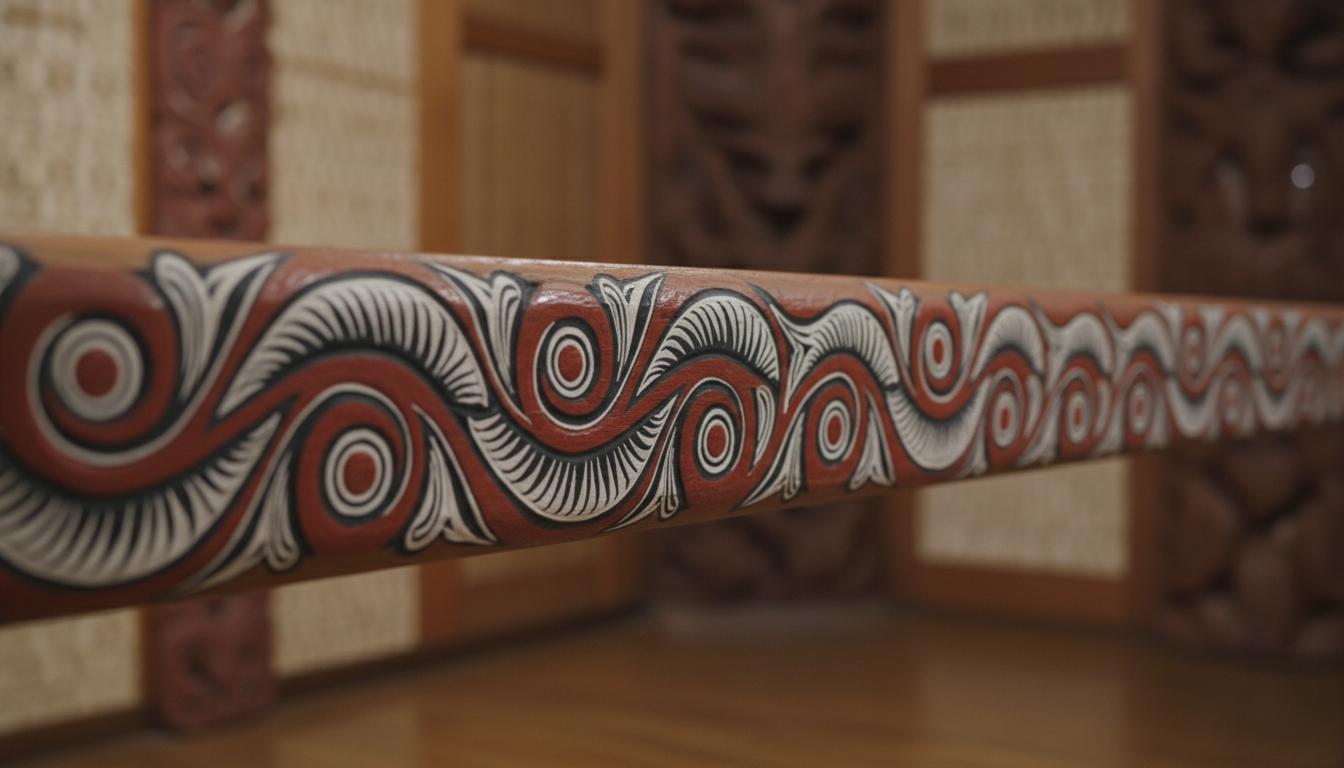
Kowhaiwhai is the flowing painted pattern you see running along the rafters of many wharenui across Aotearoa New Zealand. Red, black, and white curves glide and hook into each other, carrying stories of place, people, and movement. In this guide you’ll learn what kowhaiwhai is, how its design language works, the most recognisable motifs, and how to use it respectfully in contemporary projects.
What is
Kowhaiwhai (often written kōwhaiwhai in te reo Māori) is a painted pattern tradition used to decorate the heke (rafters) and other surfaces in Māori meeting houses. It features rhythmic, repeating forms—most famously the koru—drawn in strong red, black, and white contrasts.
- Medium: painting on timber or prepared surfaces; today also printed and digital.
- Placement: rafters and panels in wharenui, and sometimes other community buildings.
- Language of form: spirals, hooks, stems, and mirrored repeats that suggest growth and genealogy.
- Function: visual identity for hapū and iwi, memory cues for stories, and a unifying rhythm in the house.
Origins and context
Kowhaiwhai predates colonisation and sits alongside tukutuku (woven panels) and whakairo (carving) as one of the three core interior arts of the wharenui. Traditional pigments included red ochre (kōkōwai), soot or charcoal for black, and white clay, applied with brushes made from plant fibres or feathers. The art form continued to evolve through the 19th and 20th centuries, and it remains vibrant today in new houses, public spaces, and digital media.
Meaning and symbolism
The meaning of a kowhaiwhai pattern depends on the iwi, the house, and the story being told. Common themes include whakapapa (genealogy), the energy of natural growth (like a fern frond), strength and resilience, and the flow of rivers or winds. The pattern’s placement across rafters can echo the span of ancestors over their descendants. Meanings are not fixed or universal; context matters, and guidance from mana whenua is essential when design choices carry specific narratives.
How it works
At its core, kowhaiwhai is a system of visual grammar that turns simple curves into a powerful rhythm.
- Main stem: many designs use a central spine or stem along which motifs grow, guiding the eye.
- Koru and fronds: spirals and hooked branches unfurl from the stem, suggesting life and movement.
- Symmetry and repeat: patterns often mirror across a centreline or alternate across rafters.
- Positive/negative play: the shapes of the painted areas and the unpainted spaces do equal work.
- Scale and pacing: the repeat unit is sized to the timber, so the rhythm reads clearly across the room.
Pattern construction
Traditionally, tohunga and artists laid out kowhaiwhai freehand with charcoal guidelines, then painted in the forms. Today, makers might:
- Sketch a repeat unit on paper, then transfer it with light pencil lines.
- Use stencils, pounce patterns, or digital templates to keep spacing consistent.
- Vectorise the design for print, signage, or projection onto large surfaces.
Colour and materials
The classic kowhaiwhai palette is red, black, and white. It’s bold, legible from floor level, and carries strong cultural resonance. Contemporary works might add muted greys or local building tones, but most keep high contrast so the pattern reads as intended. On timber, sealers and quality paints protect edges and make cleaning easier.
Types / examples
While each house and artist can create a unique composition, some named motifs appear often in kowhaiwhai. These examples describe common readings; meanings vary by region and context.
Common motifs
- Koru / pītau: a spiral based on the unfurling fern frond. It signals growth, renewal, and the unfolding of life.
- Mangōpare: a hammerhead shark motif with a double-headed, heart-like profile. It is associated with strength, determination, and resilience.
- Kape: an eyebrow- or crescent-like arc that frames space and creates elegant rhythm between stems.
- Takarangi (double spiral): intertwined spirals that suggest relationships, balance, and movement through time.
- Rauru: a twisting, vine-like stem or spiral path that other elements branch from.
Where you’ll see them
- Wharenui rafters across Aotearoa, where kowhaiwhai completes the interior triad with tukutuku and whakairo.
- Community buildings and some Māori churches, where painted ceilings or panels carry local stories.
- Contemporary architecture, print, kapa haka stages, schools, and digital branding—ideally created in partnership with mana whenua or Māori designers.
Related Māori art forms compared
| Art form | Medium | Where you see it | Typical colours | Techniques | Primary role |
|---|---|---|---|---|---|
| kowhaiwhai | Paint on timber or panels; print and digital | Rafters (heke), ceilings, panels | Red, black, white | Freehand drawing, stencils, layering, repeats | Rhythm, storytelling, house identity |
| tukutuku | Woven lattice of kākaho and kiekie/harakeke strips | Wall panels between carved posts | Natural and dyed hues (tan, black, red) | Weaving with counted patterns | Genealogy, values, local narratives |
| whakairo | Carving in wood, bone, stone | Posts, bargeboards, poupou, waka | Timber tones with natural pigments | Carving with adzes, chisels; incised patterns | Ancestral presence, form and figure, mana |
Pros and cons
Using kowhaiwhai in a project brings opportunities and responsibilities. Here are the main trade-offs.
Pros
- Deep cultural resonance in Aotearoa; it signals place and people at a glance.
- Strong visual rhythm that unifies large spaces and guides movement.
- Scales well from rafters to print and digital interfaces.
- Flexible: motifs can be tailored to local stories and purposes.
- Educational: introduces geometry, symmetry, and te ao Māori in classrooms.
Cons
- Cultural risk: generic or out-of-context use can feel tokenistic or disrespectful.
- Interpretation varies by iwi; meanings are not one-size-fits-all.
- Good work takes time—consultation, design, approvals, and skilled painting or production.
- On rough or exposed surfaces, maintenance and repainting may be needed.
- High-contrast patterns can clash with busy interiors if not planned carefully.
How to use or choose
If you’re planning to include kowhaiwhai in a building, event, publication, or product, follow a clear process. This keeps the design strong and the relationships right.
Step-by-step
- Define purpose: write a simple brief stating where the kowhaiwhai will go, who it serves, and why.
- Engage mana whenua early: connect with local iwi or hapū to discuss intent and appropriate pathways.
- Set the story: agree on themes—whakapapa, landscape features, or community kaupapa—and who can speak to them.
- Choose motifs: select koru, mangōpare, kape, takarangi, or other forms that align with the agreed story.
- Commission a Māori artist or studio: ensure authorship, tikanga, and quality are upheld.
- Decide palette and scale: confirm red/black/white or alternatives, and size the repeat to the surface.
- Prototype: test small sections on the actual substrate; check sightlines and lighting.
- Prepare surfaces: clean, seal, prime, and mark guides so curves remain crisp.
- Produce and install: paint by hand, apply printed panels, or install digital artwork as specified.
- Credit and care: acknowledge the artist and iwi, document meanings, and plan for maintenance.
Practical tips
- Keep contrast high so the kowhaiwhai reads from a distance.
- Let the pattern breathe; avoid busy backgrounds behind it.
- Repeat length should divide the span neatly to avoid awkward cut-offs.
- Document final vector files and colour references for consistent future use.
For schools and community projects
- Work with a local advisor to choose appropriate motifs.
- Use a limited palette and clear outlines to support young painters.
- Share the story alongside the artwork so viewers learn what they’re seeing.
FAQ
What does “kowhaiwhai” mean?
Kowhaiwhai refers to the painted curvilinear patterns seen on wharenui rafters and other surfaces. The term is widely used in Aotearoa for this design tradition; you will also see the macronised spelling kōwhaiwhai in te reo Māori.
How is kowhaiwhai different from tukutuku and whakairo?
Kowhaiwhai is painted pattern; tukutuku is woven wall panels; whakairo is carving. All three work together to express identity and story in a wharenui.
Do specific kowhaiwhai motifs have fixed meanings?
Some motifs carry common associations—like the koru with growth or the mangōpare with strength—but meanings vary by iwi and context. Seek guidance for local interpretations.
Who can design or use kowhaiwhai?
Anyone can appreciate it, but design and use should be led or guided by Māori practitioners, especially when it represents a community. Engage mana whenua for public projects.
What colours should I use?
Red, black, and white are classic for kowhaiwhai and read well indoors. Other palettes can work if they respect the design’s clarity and the kaupapa agreed with iwi and artists.
Can kowhaiwhai be protected or licensed?
Yes. Specific artworks and designs are subject to copyright, and mātauranga Māori is a taonga. Commission agreements should cover authorship, permissions, and ongoing use.
How do I keep lines clean when painting?
Prime and sand the surface, snap light guidelines, use quality brushes, and cut in edges with steady, single strokes. Masking can help, but many artists prefer freehand for curves.
Is digital kowhaiwhai acceptable?
Yes—many projects use vector artwork for signage, web, and print. The same principles apply: clarity of form, correct story, and appropriate permissions.
Closing thoughts
Kowhaiwhai is more than decoration. It carries memory, creates rhythm in space, and speaks in the visual dialect of Aotearoa. With care, partnership, and craft, you can bring kowhaiwhai into contemporary work in ways that honour its depth and keep its line moving forward.