


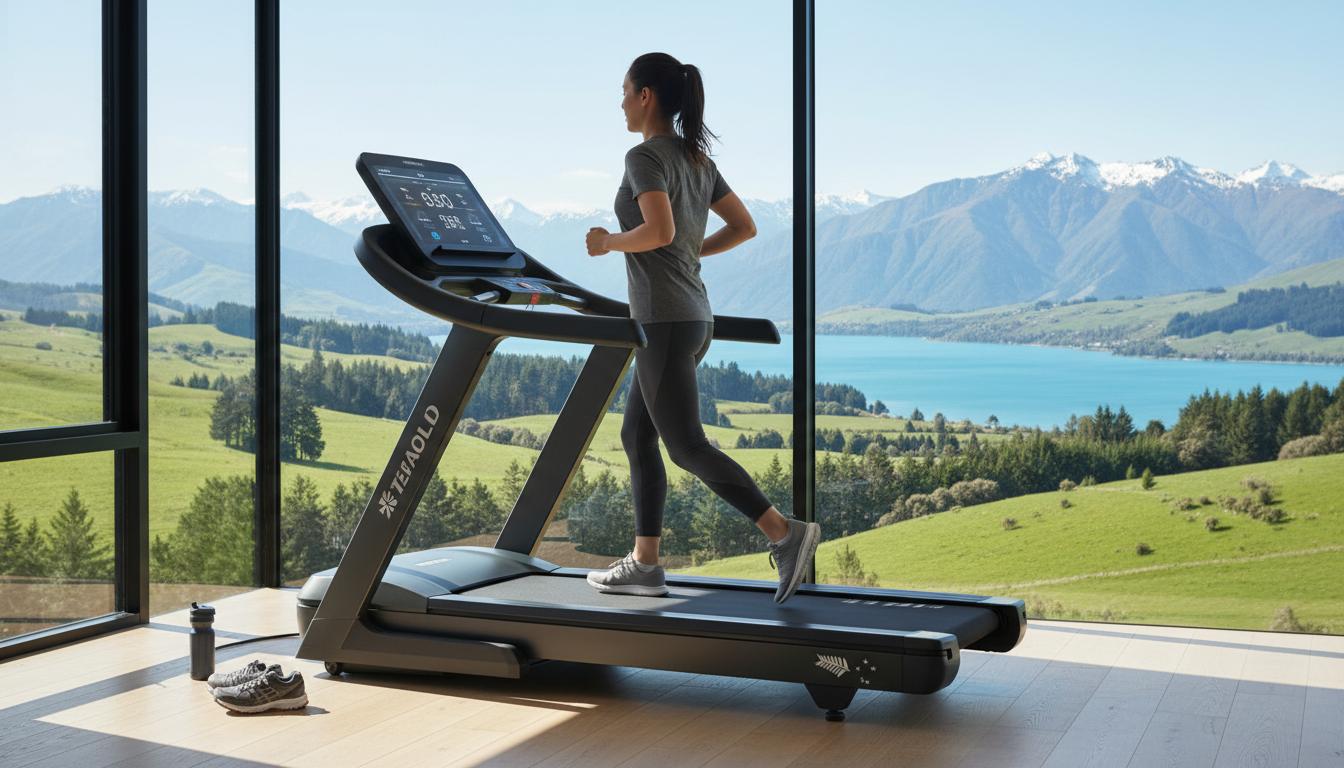
Treadmill NZ Guide: Smart Choices for Kiwi Homes, Budgets, and Goals
Weather swings, short winter days, and busy commutes make at‑home cardio feel like a lifesaver in Aotearoa. A well‑chosen treadmill keeps your training consistent, whether you’re walking to rebuild fitness or chasing 5K pace. This guide breaks down what a treadmill is, how it works, the main types you’ll see in New Zealand, key pros and cons, and a practical framework to choose and use the right treadmill NZ buyers can rely on for years.
What is
A treadmill is an indoor cardio machine with a moving belt that lets you walk, jog, or run in place. Most home units in New Zealand are motorised, offering adjustable speed and incline, fitness metrics in kilometres, and safety features like an emergency stop key. You’ll also find manual flat-belt models for simple walking and curved non‑motorised designs used by runners and coaches for a more natural stride.
In short: a treadmill gives you controlled, repeatable training at home—no traffic, no rain, no headlamp required.
How it works
Modern treadmills combine mechanical parts with electronics to deliver smooth speed control and cushioning:
- Motor and drive: A DC motor (typically 1.5–3.5 CHP for home use) powers a front roller that moves the belt. Better motors deliver steadier torque under load and run quieter.
- Deck and belt: The running surface sits on a deck with shock absorbers. Belt thickness and deck cushioning affect joint impact and noise.
- Incline system: A lift motor raises the deck, usually 0–12% or up to 15%, simulating hills common on NZ roads and trails.
- Console and controls: You set speed (km/h), incline (%), and programs. Many consoles support Bluetooth FTMS for apps like Zwift, Kinomap, or their own training ecosystems.
- Sensors: Heart rate (grips or chest strap), cadence estimates, and safety features like a magnetic key that stops the belt if pulled.
- Power: NZ mains is 230V, 50Hz. Most home treadmills plug into a standard Type I socket; no special wiring is normally needed.
Set a speed, the controller feeds power to the motor, and the belt turns at that pace. You manage stride and posture, as you would outdoors, but with consistent grade and surface.
Types / examples
Knowing the landscape helps you match a treadmill to your space and style:
- Manual flat-belt: Budget, no power required, good for steady walking. Limited speed control and usually smaller decks.
- Motorised folding: The most common treadmill NZ households buy—folds vertically to save space, solid for walking to mid‑pace running.
- Motorised non‑folding: Heavier frame, bigger deck, smoother at high speeds; needs a permanent spot.
- Curved non‑motorised: Belt moves by your stride. Great for sprints and coaching; pricier and larger.
- Rehab/low‑step: Extra handrails, low starting speeds, shock absorption for joint issues or return‑to‑exercise.
- Commercial: Built for gyms—wide decks, high top speeds, and long warranties; expensive and heavy.
Examples in a NZ context:
- Apartment in Auckland: A compact folding model with a 140 × 50 cm deck, good noise control, and transport wheels.
- Garage gym in Christchurch: Mid‑range motorised unit with 3.0 CHP, 15% incline, and Bluetooth for Zwift on rainy days.
- Rural lifestyle block: A robust motorised treadmill with good dust protection or a curved manual model to avoid power concerns.
- Rehab at home: Low step‑up height, soft cushioning, and handrails; start at 0.8–1.0 km/h.
Quick comparison: which treadmill suits me?
| Profile | Deck size (L × W) | Motor (CHP) | Speed (km/h) | Incline | Footprint (L × W) | Indicative price (NZD) | Notes |
|---|---|---|---|---|---|---|---|
| Walker / light jogger | 135–145 × 46–50 cm | 1.75–2.5 | 0.8–12 | 0–10% | 150–170 × 70–80 cm | $800–$1,800 | Quiet, compact, fine for daily steps and gentle hills. |
| Everyday runner | 145–152 × 50–52 cm | 2.5–3.0 | 0.8–18 | 0–12/15% | 170–190 × 80–85 cm | $1,800–$3,500 | Stable at tempo pace; better cushioning and connectivity. |
| Speed / high mileage | 150–160 × 52–56 cm | 3.0–4.0 | 0.8–20/22 | 0–15% (some with decline) | 185–210 × 85–95 cm | $3,500–$6,500+ | For fast intervals, tall runners, and heavy use. |
Pros and cons
Pros
- Consistency: Train regardless of southerlies, dark mornings, or school pickups.
- Time‑efficient: Zero travel; squeeze in 20–30 minutes any day.
- Safety: Avoid traffic, uneven paths, and low‑light hazards.
- Structured training: Precise pace and incline for intervals and rehab.
- Joint‑friendly: Cushioned deck is easier than concrete footpaths.
- Connectivity: Pair with apps, stream classes, track progress.
Cons
- Upfront cost: Solid machines are an investment.
- Space and weight: 70–120 kg units need a stable spot and access for delivery.
- Noise and vibration: Apartments and timber floors may need a thick mat.
- Maintenance: Belt lubrication, cleaning, and occasional alignment.
- Monotony: Staring at a wall can feel dull without a plan or entertainment.
How to use or choose
How to choose a treadmill NZ buyers won’t regret
- Define your top speed and stride: Runners over 180 cm or aiming for 16–20 km/h need a longer, wider deck.
- Match motor to workload: Aim for 2.5 CHP for regular jogging, 3.0+ CHP for frequent running or heavier users.
- Check deck size and cushioning: 140 × 50 cm is a sensible minimum for mixed walking/running; go larger for sprints.
- Look for incline you’ll use: 10–15% covers hill sessions; a few models add slight decline for downhill practice.
- Measure your space twice: Include clearance behind the deck (at least 1–2 metres) and ceiling height for tall users on incline.
- Assess noise: Heavier frames, quality decks, and a good mat reduce transfer to neighbours and downstairs rooms.
- Connectivity and apps: Confirm Bluetooth FTMS if you want Zwift or Kinomap; check tablet shelf and charging options.
- Warranty and support in NZ: Favour clear local parts/labour terms (e.g., 1–2 years labour, longer on motor/frame) and easy access to service technicians.
- Delivery and installation: Ask about stairs, rural surcharges, and whether they assemble and remove packaging.
- Budget honestly: Good value in NZ often sits between $1,500–$3,000 for regular runners; cheaper for walkers.
Setup and first run
- Place a high‑density mat: Protect floors, reduce vibration, and catch sweat.
- Position safely: Leave clear space behind; keep children and pets away during use.
- Power correctly: Plug into a dedicated 230V outlet with an RCD. Avoid cheap generators; if using backup power, choose a pure sine wave inverter.
- Level the base: Adjust feet so the deck is stable; check belt alignment per the manual.
- Update firmware/connect apps: Pair Bluetooth, set metric units (km/h), and test heart‑rate pairing.
- Warm up at 4–6 km/h: Get used to the deck, then test incline changes gradually.
- Use the safety key: Clip it to your clothing every session.
Care and maintenance
- Lubricate the belt: Many decks need silicone lube every 2–3 months (or per hours used). Some belts are pre‑lubricated—check your manual.
- Keep it clean: Wipe sweat and dust weekly; vacuum around the motor cover and under the deck to protect electronics.
- Align and tension: If the belt drifts, make small quarter‑turn adjustments to the rear roller bolts.
- Humidity control: Garages and coastal areas benefit from a dehumidifier to protect electronics and prevent belt slip.
- Annual service: A routine check extends life and maintains warranty compliance.
Training tips for better results
- Use incline 1–2% to mimic outdoor effort if you miss wind resistance.
- Mix sessions: Easy walks, rolling hills, tempo runs, and short sprints keep motivation high.
- Strength and mobility: Add calf raises and hip work to stay resilient when mileage rises.
- Entertainment and metrics: Queue a playlist or podcast and set one goal per session—time, distance, or intervals.
FAQ
How much should I spend on a home treadmill in NZ?
Walkers can find solid options from about $800–$1,500. Regular runners typically land in the $1,500–$3,000 range. High‑speed or heavy‑use buyers may want $3,000–$6,500+ for stability, larger decks, and stronger motors.
What motor size do I need?
As a rule of thumb: 2.0–2.5 CHP for walking/light jogging, 2.5–3.0 CHP for regular running, and 3.0–4.0 CHP for high mileage or heavier users. Quality and torque delivery matter as much as the number on the sticker.
Will it fit my space?
Most treadmills are 150–210 cm long and 70–95 cm wide. Allow 1–2 metres of clear space behind the deck and check ceiling height—tall runners on 10–15% incline need extra headroom.
Are foldable treadmills stable?
Good folding designs are stable for everyday running. For frequent fast intervals or tall users, a heavier non‑folding frame can feel more planted.
How loud are treadmills?
Noise comes from footfall, motor, and vibration through floors. A heavy unit on a quality mat in a ground‑floor room is usually neighbour‑friendly. Apartments and timber floors benefit from thicker mats and slower speeds at night.
Do I need a special power outlet in NZ?
No. Most home treadmills use a standard 230V Type I socket. Avoid extension cords where possible; use an RCD and a surge protector. Skip cheap generators—use pure sine wave power if you must run off-grid.
What’s a good deck size?
For mixed walking and running, aim for about 140 × 50 cm. Sprinters, tall runners, and anyone doing fast intervals should look for 150–160 × 52–56 cm for comfort.
How long do belts and decks last?
With lubrication and cleaning, a home belt often lasts 3–5 years under regular use. Decks can last longer; flip or replace when wear shows. Heavy use or a dusty garage shortens lifespan.
Can I keep a treadmill in the garage?
Yes, but manage humidity and dust. Use a mat, cover the unit when not in use, and consider a dehumidifier—especially in coastal regions.
What about warranties and consumer rights?
Expect around 1–2 years labour and longer coverage on the motor and frame from reputable NZ retailers. Your rights under the Consumer Guarantees Act still apply—goods must be of acceptable quality and fit for purpose.
Is a curved treadmill worth it?
They shine for sprints, form work, and group training, and they need no power. For mixed home use and easy runs, a motorised treadmill offers broader flexibility and often better value.
How do I make treadmill runs feel less monotonous?
Use intervals, vary incline, stream classes, or run on Zwift with friends. Set a simple target—like 20 minutes at 5%—and finish with strides to keep it fresh.
What’s the difference between CHP and HP?
CHP (continuous horsepower) reflects sustained output and is more useful than peak HP ratings. When comparing models in NZ, focus on CHP for a realistic picture of performance.
Can I use a treadmill as a walking desk?
Yes, at 1–3 km/h on a stable unit with proper screen height. If working long hours, check motor cooling and duty cycle, and alternate sitting and standing.
Final thoughts
Choosing a treadmill NZ buyers can trust comes down to fit: your stride, your pace, your space, and your budget. Prioritise deck size and stability, confirm local support and delivery, and set up your space for comfort and quiet. Do that, and the machine becomes more than hardware—it becomes the most dependable training partner in your house.